

We want to understand our Bibles, don’t we?
We want to be able to put together the great story of redemption, catch a glimpse of what this book meant to its original authors and audience, and therefore what it should mean to us. This is our story, and we’re eager to claim it.
But when we attempt to study our Old Testament, we struggle.
One of the biggest challenges I see is what I call the “Dysfunctional Closet Syndrome.”
In my mind, I’m picturing a closet, much like mine in college, where the clothes have slipped from their hangers, jackets and belts and bathing suits are overflowing from their designated shelves, and the floor is flooded with stuff you can’t even identify.

Have you ever been there?
Would it stun you to find out that the typical Christian’s knowledge of the Old Testament is much like that very messy closet, crammed full of names and dates and places that are all jumbled up on top of each other and therefore impossible to use?
Maybe you’ve memorized names, dates, places, and stories over the years. You know Abraham and Moses and David. You know about the twelve tribes of Israel. You’ve heard the stories of the judges and the kings and the prophets.
But how does it all fit together?
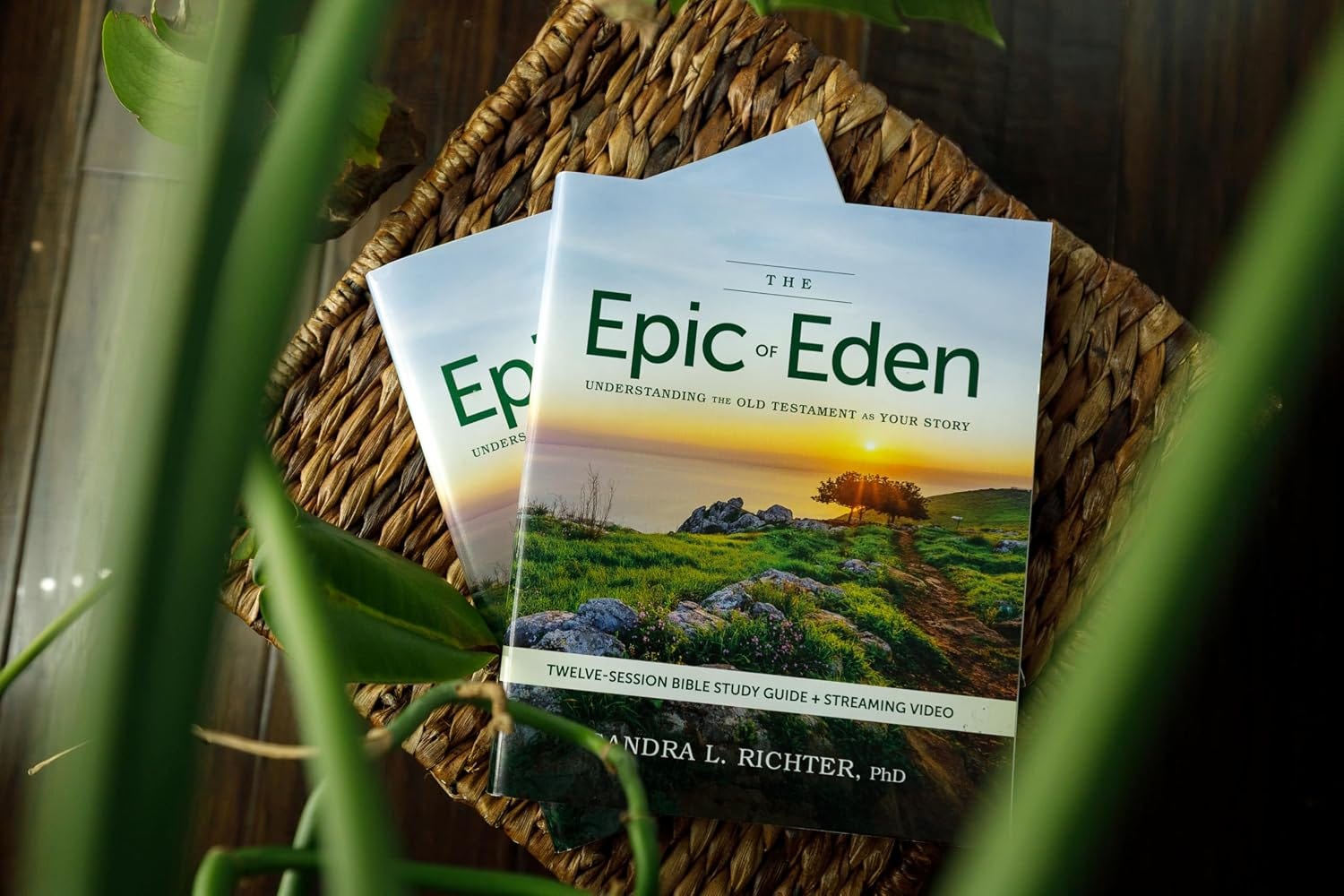
That’s where The Epic of Eden: Understanding the Old Testament as Your Story comes in.
My job, as your Old Testament closet organizer, is to pull out all of that stuff that you’ve memorized over the years, to get the random pieces up off the floor, put all those pieces in order, an order that makes sense and follows the theological trajectory of the biblical authors, add a few pieces here and there, and then get you a whole bunch of new rods and hangers and shelves and hooks so that you can use all the great stuff that you have.
But there’s another reason we struggle with the Old Testament. The narratives happened long, long ago and far, far away. The geography is strange, the economy unrecognizable, and, strangest of all, to step into this book is to step into someone else’s culture.
So my job is also to serve as your tour guide, to get you past the “Great Barrier” and back into the story.
We’ll work with timelines, maps, and a good bit of ancient anthropology and archaeology. We’ll step into the cultural norms of ancient Israel and encounter the very real people of the Old Testament.
Because this is your story.
According to Galatians 3:29, when you were baptized into Christ, you became an heir of Abraham. And I won’t be done with you until I find you weeping over Sarah’s empty arms and I find you in the crowd, right along with Moses, shouting, “Let my people go.”
This is your story.
And my goal in The Epic of Eden: Understanding the Old Testament as Your Story is to help you get the pieces out of the closet, put them in order, and see the great story of God and his people in a way that makes sense.
The Old Testament isn’t an unfortunate preface to the part of the Bible that really matters.
It is your story.
I highly recommend this study to anyone who is considering it. I have led my women's Bible Study through this study and they all loved it so much that we are now on our third study from the series. I am also leading my youth group through the study and even though it is more work on my part (because I'm having to condense the daily studies into an hour long Sunday School class and I am altering the video discussion questions to make then fit their phase of life) it is well worth the effort! I'm even looking into creating a plan for teaching our children's class through some sort of Epic of Eden curriculum because it is just that good! I cannot say enough good things about this series! Not to mention, the author is pretty fantastic as well. 😁
The Sunday school class I teach has been waiting for this version to appear!